
Payroll & Compliance
Payroll runs, payslips, EPF, ESIC, PT, and India statutory compliance.
35 resources

How to Automate Monthly Payroll from Attendance Data
Step-by-step guide to running payroll in Attend Mitra from live attendance and leave data — LOP, overtime, payslips, and statutory challans.
EPF & ESIC Setup Guide
Configure Employee Provident Fund and ESIC deductions in Attend Mitra for automated statutory compliance every payroll cycle.

Payslips: Generation and Distribution
Generate, publish, and distribute digital payslips through Attend Mitra with full salary component breakdown.
Payroll Software With Overtime Calculation: From Attendance Log to Payslip
How overtime should flow from verified attendance into payroll — multipliers, loss of pay, EPF and ESIC treatment, payslip generation, and the bank transfer file.
 HOW-TO
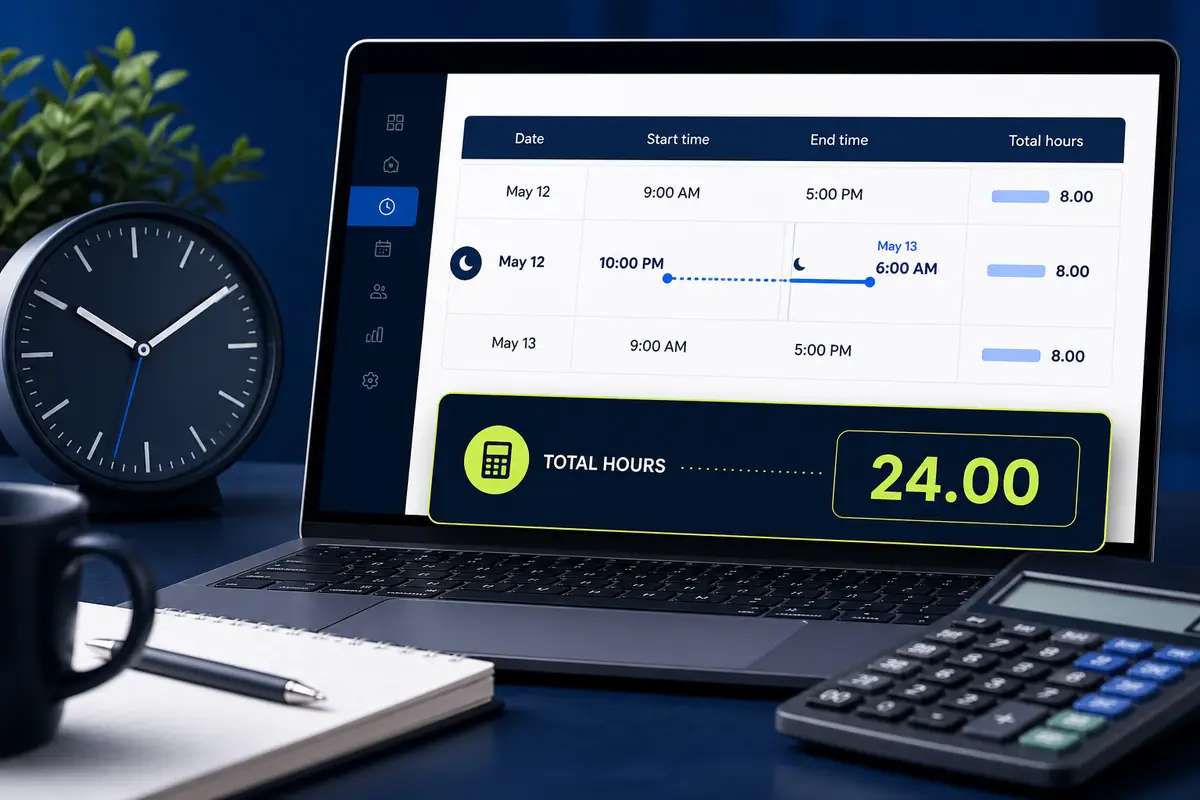
How to Calculate Employee Hours for Payroll: A Practical Guide
Learn how to calculate employee hours from attendance records, handle breaks and overnight shifts, separate overtime, and prepare a payroll-ready hours report.
 PAYROLL PLAYBOOK
How to Prepare Attendance for Payroll Without Month-End Chaos
A step-by-step payroll preparation workflow for closing attendance, resolving exceptions, approving overtime, and sending clean hours to payroll.
 PAYROLL HOW-TO
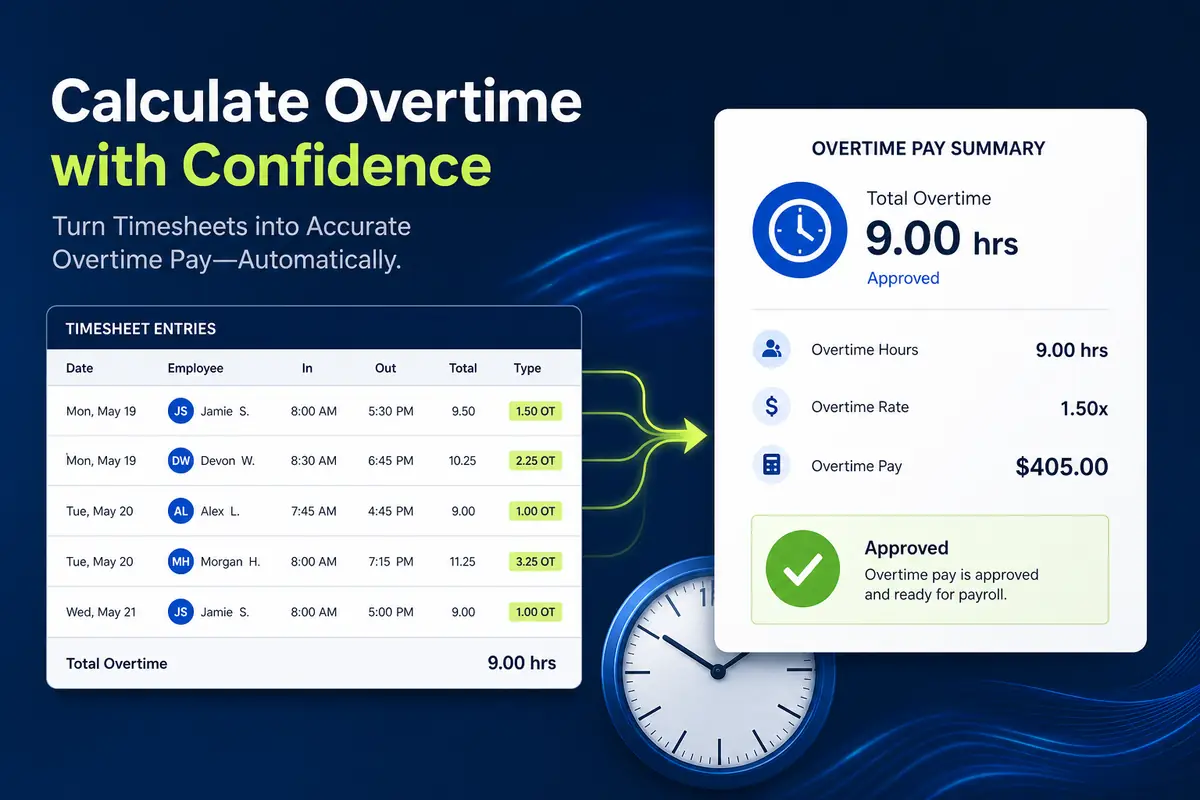
How to Calculate Overtime From Timesheets
Learn how to turn approved timesheet entries into regular hours, overtime, holiday hours, and payroll-ready totals without double counting breaks or shifts.
 NIGHT SHIFT
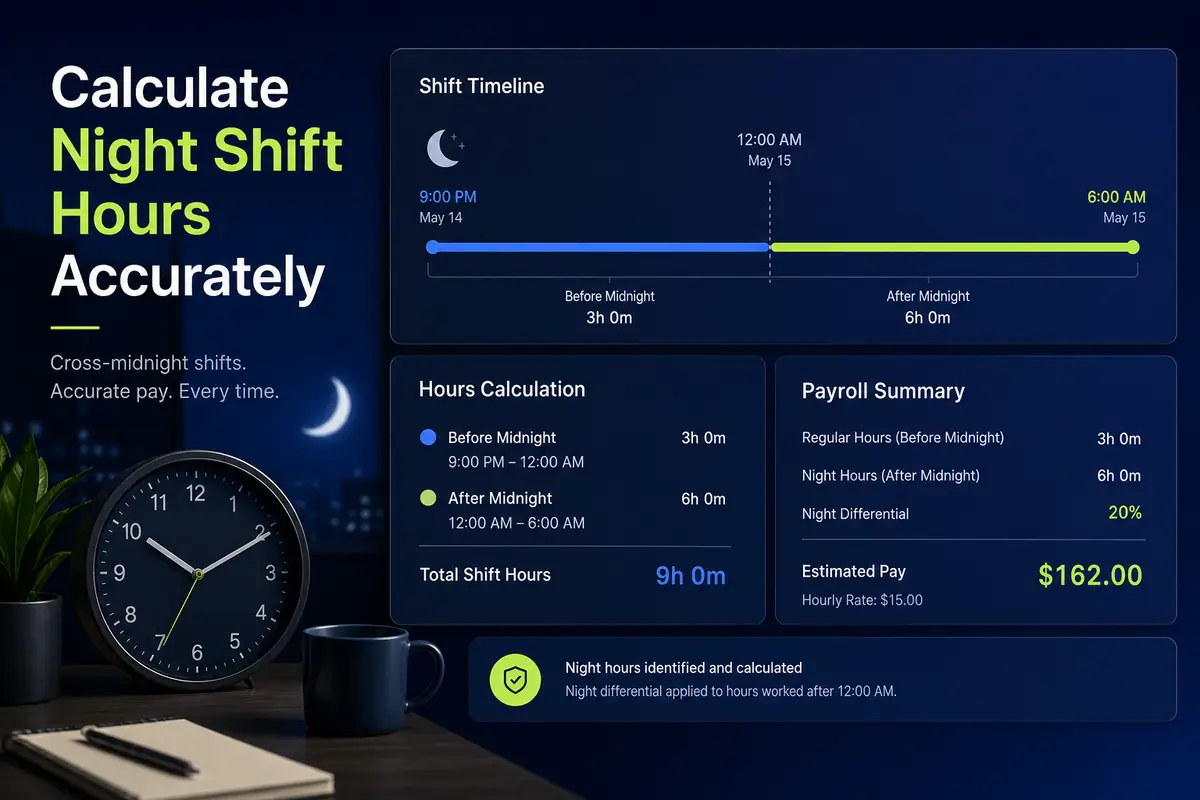
How to Calculate Night-Shift Hours for Payroll
A clear method for calculating cross-midnight shifts, night differentials, breaks, overtime, and payroll dates without negative hours or double counting.
 PAYROLL HOW-TO
How to Calculate Half Day and Overtime Together
A practical method for days that trigger both a half-day status and overtime hours, with worked examples, India daily-wage practice, and LOP rules that do not double-count.
 PAYROLL HOW-TO
How to Convert Timesheets Into Payroll
Turn approved timesheets into a payroll-ready hours file: approvals, regular and overtime mapping, rounding, cutoff, and exports to Tally, greytHR, or in-house pay.
 PAYROLL HOW-TO
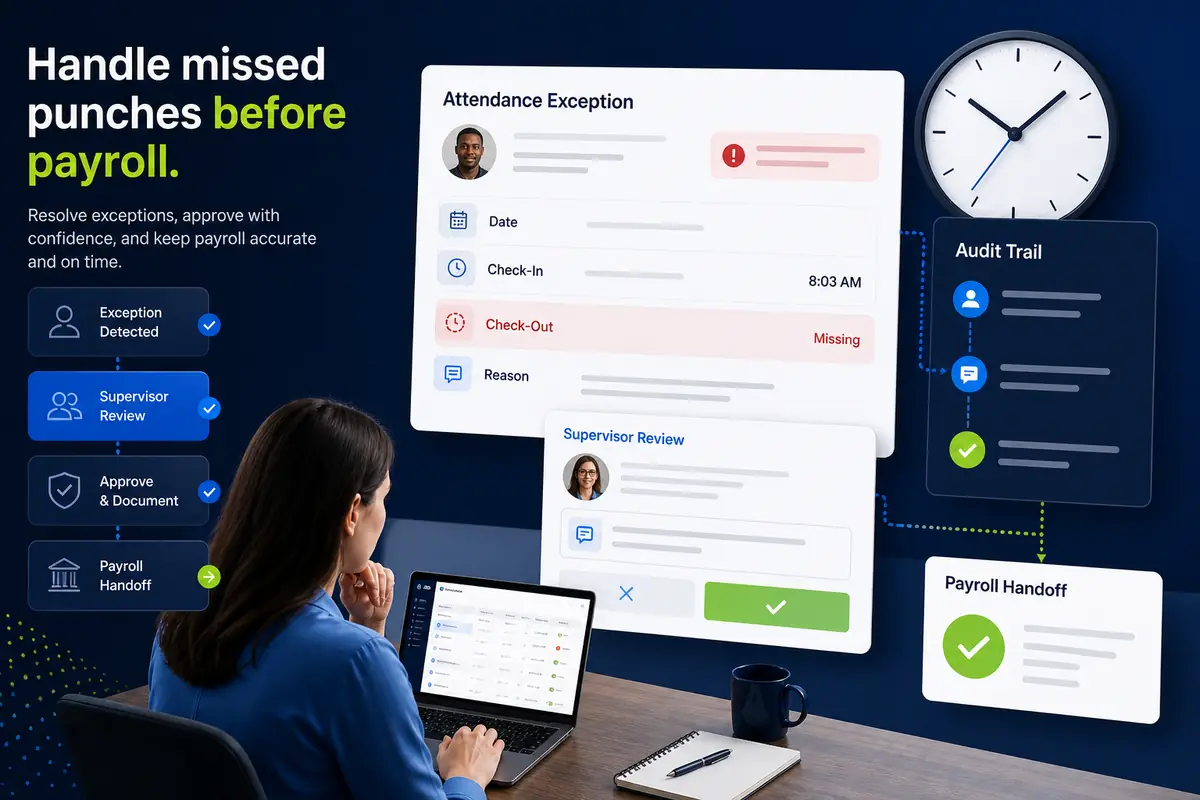
How to Reduce Attendance Errors Before Payroll
A week-by-week exception hygiene playbook so missing punches, duplicates, overlapping shifts, and late supervisor edits are closed before payroll, not during it.
 PAYROLL HOW-TO
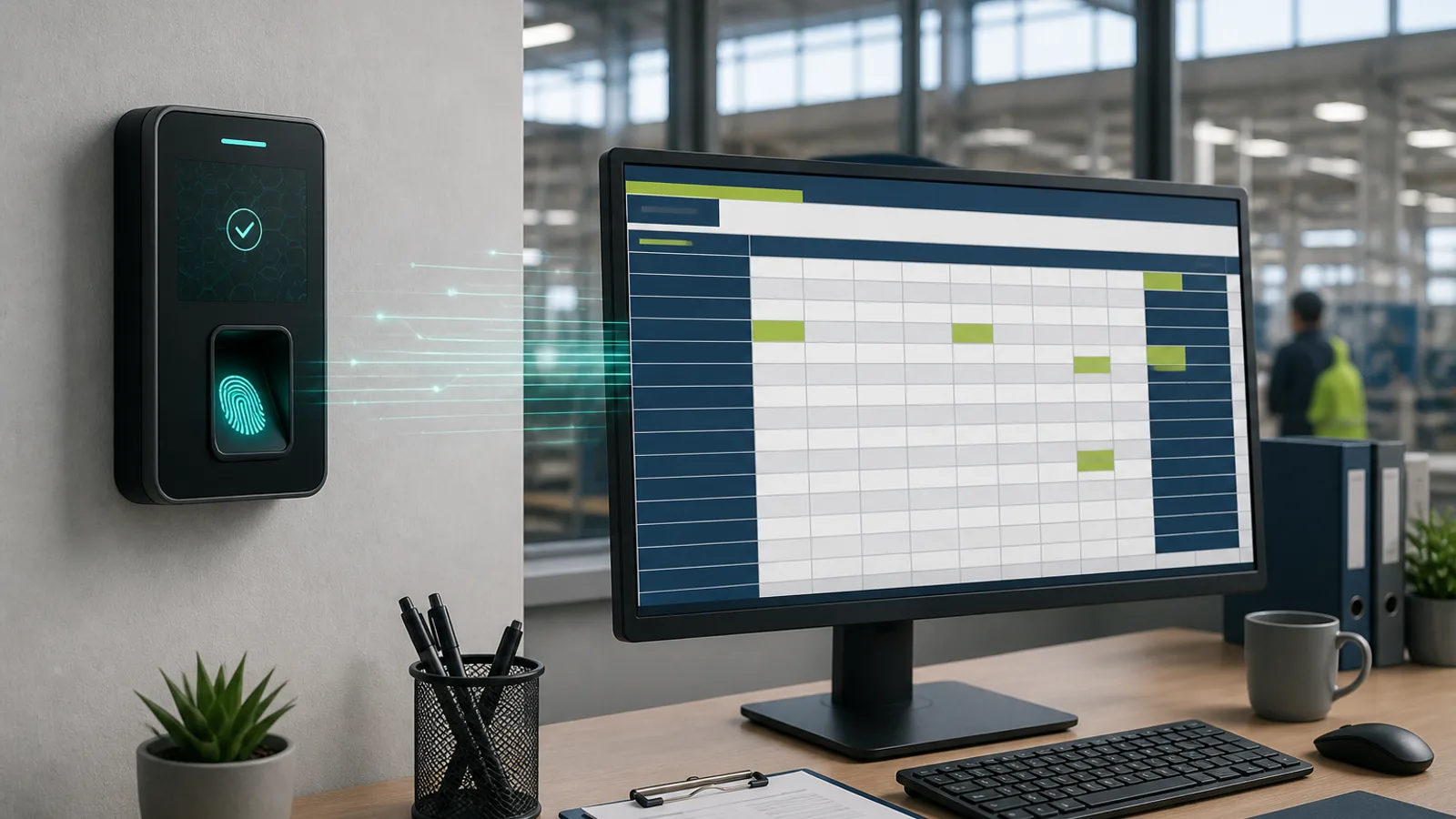
How to Export Biometric Attendance to Payroll
A practical export path from biometric device logs to payroll hours: employee ID mapping, device clock drift, CSV columns, and the field-staff gaps hardware never captures.
 EXCEL HOW-TO
How to Calculate Hours Worked in Excel for Payroll
Excel formulas for payroll hours: TIME values, (out-in)*24, MOD for overnight shifts, decimal hours, text-time pitfalls, and the point a 200-person file stops being safe.
 TIMESHEET
How to Create Employee Timesheets That Payroll Can Trust
Build timesheets payroll can post without reinterpretation: required fields, daily versus weekly layouts, site and project tags, approval, and lock after cutoff.
Security Guard Salary Calculation in India: Components, Overtime, PF and ESI
How security agencies calculate a guard's monthly salary: minimum wage basic and VDA, the 26-day divisor, attendance-based payable days, overtime at double rate, PF and ESI deductions, bonus accrual, and the payslip lines that result.
 LABOUR LAW
Security Guard Minimum Wages in India: State-Wise Guide to Notifications and Revisions
How minimum wages for security guards are set state by state, why guards fall in the semi-skilled and skilled categories, when VDA revisions land, how to read a notification, and how to keep your wage master and client contracts in step.

PSARA Compliance Checklist for Security Agencies: Licence, Register, Training and Wages
Everything a private security agency must keep in order under PSARA 2005 and the Model Rules 2020: licence validity and display, the section 15 register, guard verification and training hours, wage and statutory compliance, and the records inspectors ask for.

How Security Agencies Bill Clients: Invoice Format, Man-Hours and Reconciliation
The billing models security agencies use, what a compliant security agency invoice must show, how GST applies under forward and reverse charge, why attendance-to-invoice reconciliation is where disputes start, and a month-end process that gets invoices paid.
PF Calculation on Salary: Formula, Rates and the New ₹25,000 Ceiling
How employee and employer PF is calculated on basic plus DA, what changed when the wage ceiling moved to ₹25,000 on 17 September 2026, and how to set up the wage master so payroll never under-deducts.
PAYROLL HOW-TOESI Calculation on Gross Salary: Rates, Ceiling, Contribution Periods and Examples
How ESI contributions are calculated on gross wages, who is covered under the ₹21,000 ceiling, how the six-month contribution periods work when someone crosses the limit, and worked examples with rounding.
PAYROLL HOW-TOSalary Structure in India: Components, the 50% Basic Rule and Two Worked Break-Ups
What goes into an Indian salary structure, how the Code on Wages 50% rule reshaped low-basic break-ups, and two worked structures for a ₹25,000 per month employee and a ₹6 lakh CTC hire with the PF, ESI and gratuity cost effects.
 PAYROLL HOW-TO
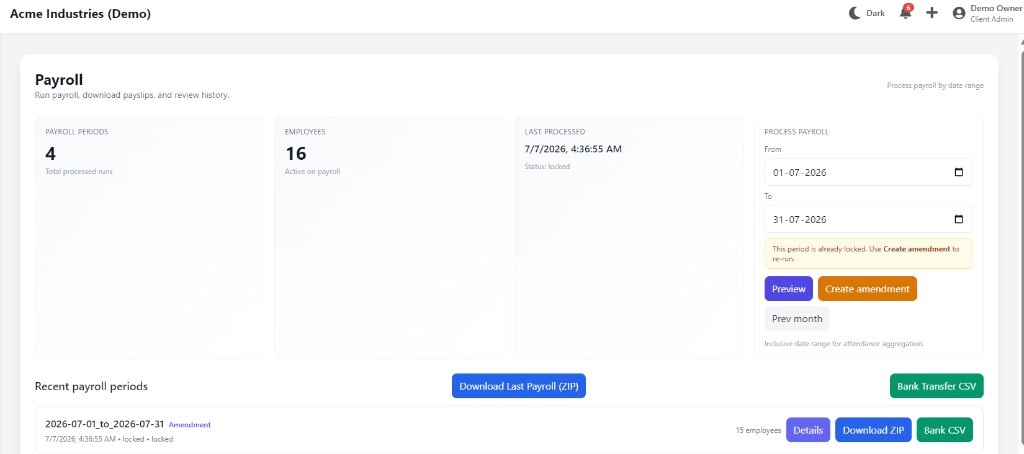
How to Calculate Salary Per Day and Loss of Pay (LOP): 26, 30 and Calendar-Day Methods
Three divisor methods for per-day salary, when each is used in India, a worked ₹26,000 example with two LOP days in a 31-day month, half-day and late-mark deductions, sandwich rules and how LOP flows into PF and ESI.
LABOUR LAWOvertime Calculation Formula in India: Labour Law Rules, Hourly Rate and Worked Examples
The legal basis for double-rate overtime under the Factories Act and Code on Wages, what the ordinary rate includes, the monthly ÷ 26 ÷ 8 hourly formula, worked examples including a 12-hour security post, and Excel formulas.
LABOUR LAWBonus Calculation as per the Payment of Bonus Act: Eligibility, 8.33% Formula and Examples
How statutory bonus is calculated under the Payment of Bonus Act 1965: who is covered, the ₹21,000 eligibility limit, the ₹7,000 or minimum-wage calculation ceiling, 8.33% to 20% rates, pro-rata rules, timing, registers and how it fits security and contract-labour billing.
LABOUR LAWGratuity Calculation: Formula, 5-Year Eligibility Rule, ₹20 Lakh Ceiling and Examples
How gratuity is calculated under the Payment of Gratuity Act using the 15/26 formula, the five-year eligibility rule and the 4 years 240 days debate, the ₹20 lakh ceiling and tax exemption, 4.81% provisioning in CTC, forfeiture and who pays for contract and security staff.
POLICYLeave Encashment Calculation: Formula, Rules and Tax Treatment for Employers
Which leave types can be encashed, when encashment is triggered, the (basic + DA ÷ 30 or ÷ 26) × days formula with worked examples, the ₹25 lakh tax exemption on exit versus full taxability in service, and how to document the rules and balances.
EPF Wage Ceiling Raised to ₹25,000: What Changes for Payroll From 17 September 2026
What the increase in the EPF wage ceiling from ₹15,000 to ₹25,000 means for employers: who becomes newly covered, the employer cost impact with examples, the EPS cap effect, the September 2026 split-month computation and a payroll configuration checklist.
Professional Tax Slabs State-Wise in India (2026): Rates, Applicability and Payroll Setup
Which states levy professional tax, the current monthly slabs for Maharashtra, Karnataka, Telangana, West Bengal, Gujarat and Madhya Pradesh, why February is higher, and how to apply the right slab to staff spread across branches.
LABOUR LAWLabour Codes 2025: What Changes for Attendance, Salary Structure and Payroll
The four Labour Codes took effect on 21 November 2025. Here is what the 50% wages rule, 48-hour week, consent-based overtime, electronic registers and fixed-term gratuity actually change in your attendance rules, CTC structure and monthly payroll.
PAYROLL HOW-TOPayroll Compliance Checklist for India: Monthly, Quarterly and Annual Statutory Deadlines
A working statutory compliance checklist for Indian payroll teams: PF, ESI, TDS, professional tax and LWF dates, the 24Q return, Form 16, bonus and gratuity timelines, mandatory registers and the documentation trail that survives an inspection.
PAYROLL HOW-TOPayroll Process Steps in India: From Attendance Cutoff to Bank File and Filings
A step-by-step payroll cycle for Indian companies: pre-payroll master data, attendance and LOP inputs, gross-to-net order, statutory deductions, validations, approvals, NEFT disbursement, payslips and post-payroll filings, with a realistic monthly timeline.
Form 16 Guide for Employers: Part A, Part B, Due Date and How to Generate It
What Form 16 is from the employer's side: the TRACES-generated Part A, the salary and tax computation in Part B, the 15 June due date, prerequisites like matched challans and filed 24Q, common errors, and how Form 16 differs from 16A, 26AS and AIS.
LABOUR LAWMinimum Wages Compliance Guide for Employers in India: Categories, VDA and Payroll Setup
How minimum wages are fixed under the Code on Wages and state notifications, how skill categories and zones work, how to convert the monthly rate to daily and hourly, what counts toward the minimum, the VDA revision cycle and how to keep the wage master compliant.
POLICYNight Shift Allowance in India: Rules, Policy Design, Taxability and a Worked Payroll Example
Night shift allowance is a policy matter, not a statutory entitlement, for most private employers in India. This guide covers how to define a night shift, the three common allowance designs, how it interacts with overtime, its taxability, attendance rules that trigger it automatically and sample policy clauses.
Salary Slip Format Explained: Every Field, What It Means and How It Ties to Attendance
A field-by-field walk through the Indian salary slip: header, attendance block, earnings and deductions lines, net pay and employer contributions, how each line traces to attendance and statutory rules, the Code on Wages wage-slip requirement, and the mistakes that make a payslip useless in a dispute.